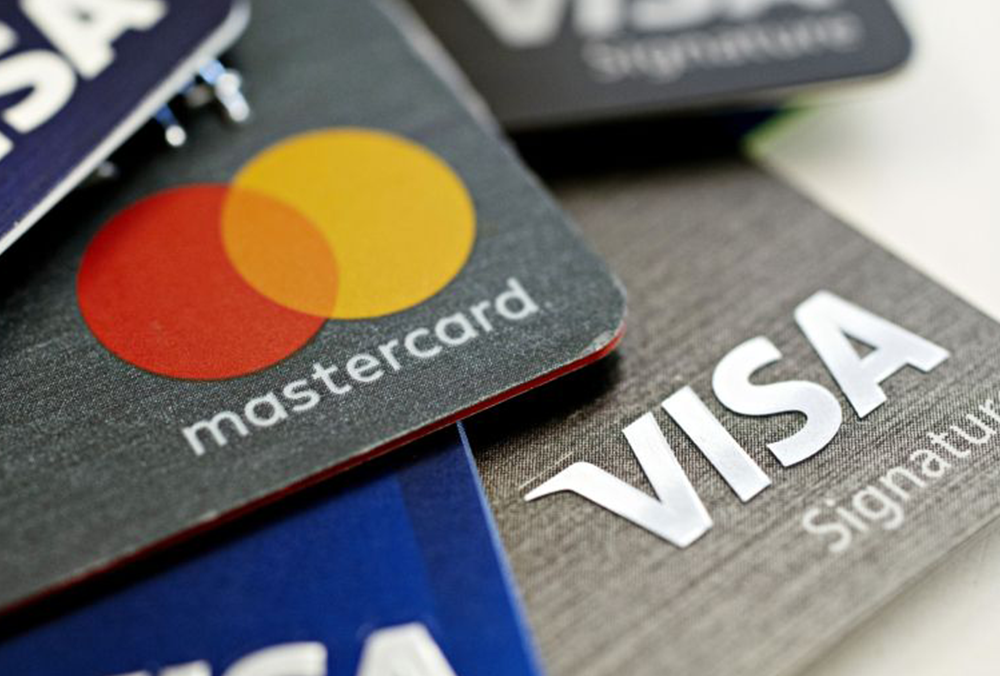
Thabo, a young professional in Johannesburg earns about R12,000 per month and also runs a side business. He needs to buy a house in two years' time. With minimal earnings, Thabo doesn't wish to take on debt but would like to build up a healthy credit record for a home loan in the future – and enjoy some perks along the way. This guide will show how someone like Thabo can start a credit card rotation strategy using two or three credit cards (for example, one from FNB, one from Capitec, and one from Discovery Bank) to improve his credit score and payment history, while maximizing rewards like eBucks, Live Better, and Discovery Vitality. We’ll also cover the risks of poor management and how to avoid them.
What Is Credit Card Rotation? Credit card rotation means using more than one credit card in a deliberate fashion, not in order to accumulate debt, but in order to distribute spending across cards for maximum benefit. Instead of making each purchase on just one card, Thabo can rotate between, say, an FNB card, a Capitec card, and a Discovery Bank card, with varying rewards. For example, he can use his FNB card for fuel (to get eBucks), his Discovery card for shopping (to get cashback on Vitality), and his Capitec card for routine spends (to get flat cash back). By using different cards, he keeps each card active each month, keeping a healthy payment history across more than one account. Most notably, Thabo will need to pay off the balance of every card each month in full to avoid interest. It is only effective if you use the credit cards as debit cards (spending only what you have). Why do so? Two reasons: build credit and earn rewards. Credit bureaus in South Africa reward such behaviours as making payments on time and low credit utilisation. Having more than one card responsibly is good for your "credit mix" and shows lenders you manage credit well.
And while you're doing this, you might as well accumulate some loyalty rewards (like eBucks or cash back) on expenses you'd be making anyway. Building Your Credit Score (For That Future Home Loan) When you’re preparing for a home loan, your credit score is king. Lenders look at your history with credit cards, among other accounts, to judge if you’re a responsible borrower. Thabo’s plan is to use credit cards as a tool to build credit, not as free money. Here are some realistic strategies to do this: Always pay in full and on time: Payment history makes up a humongous amount of credit scores. Thabo sets automatic payments or calendar reminders so he never misses a payment due date. Paying the entire statement balance each month ensures he doesn't pay interest and demonstrates he can manage debt. This reflects positively on each card.
Keep utilisation low: Utilisation is the percentage of credit limit used. If Thabo has a R5,000 limit and spends R1,500 in a month, that’s 30% utilisation. A general rule is to stay under ~30% of your limit. He can space out purchases on two or more cards so that no single card is full. This can enhance his credit standing in the long term, as a low balance shows he is not desperately in need of credit.
Have a credit mix: Having two or more types of credit (store accounts, for example, and a small loan or credit cards) can be beneficial. Having two or three cards in themselves won't greatly enhance your "credit mix" score, but two or three in good condition can signal responsibility.
In fact, a financial expert notes that a credit card “will serve to enhance – and even double – your overall credit score when you’re starting out and use it to buy basic necessities such as groceries, then pay off the full amount each month.”
In other words, using a credit card responsibly is a far cheaper way to build credit than high-interest store cards or loans. Use the cards for everyday expenses, not luxuries: Thabo only uses his cards for regular, budgeted expenses like groceries, petrol, or his phone data, and not for indulgences.
By keeping the credit card in mind as cash (or more accurately, as a debit card he will have to pay up for shortly), he does not overindulge. As a caution from one advisor, "you shouldn't be using your credit cards to pay for food or other regular monthly living expenses" if what you mean is that you're overspending your ability to pay. The trick is to charge only what you'd have paid cash for – the card is only a convenience to track it and build credit, not an excuse to buy things you can't afford.
Making use of the 55-Day Interest-Free Period Most South African credit cards offer interest-free purchases of up to 55 days – a great facility if you use it correctly. "Up to 55 days" means that you may be able to pay back nearly two months from the date of purchase without incurring interest, but it is all down to timing. This is how it works:
Illustration: A calendar of a 55-day interest-free period. Purchases made soon after the statement date (Purchase A on Day 1) enjoy the whole ~55 days interest-free to the due date for payment. Purchases made later in the billing cycle (Purchase B on Day 30) enjoy only ~25 days of interest-free time to the same due date. Payment of the statement balance in full on Day 55 wipes out all interest. Both cards contain a billing cycle (typically ~30 days) and a due date. Thabo won't need to pay for as long as 55 days (when that billing cycle's payment is due) if he buys something on the very first day of his cycle.
But if he makes a purchase on the day before the statement cut, his purchase will be due much sooner (say ~25 days later) capitecbank.co.za . The key point: interest-free period only if you pay the total amount by the due date – otherwise interest begins immediately on all purchases. Thabo times his large buys immediately after the statement date so that he has the highest amount of free float. But he's not taking it as a carte blanche to overspend – it's simply a means of giving himself a bit of leeway. Less than 20% of South Africans use their interest-free days.
But with discipline, it can be a useful tool. Tip: By flipping over two cards, you may even stagger payments to consistently fall into a good part of a cycle. For instance, use Card A to pay for first-half-of-the-month bills and Card B to pay for second-half-of-the-month bills – both cards' statements come at different times, giving you basically two separate periods of interest-free borrowing. This is a highly sophisticated approach and involves discipline, making payments not to miss a payment. The simplest advice remains: pay all the cards, all the time. That way, you never pay interest, and your credit record is never tarnished.
Saving Rewards: eBucks, Live Better, Vitality – Maximising Every Rand Apart from building credit, Thabo wants to get some rewards on his everyday spending. South African banks offer a number of rewards programmes: FNB's eBucks, Capitec's Live Better, and Discovery's Vitality Money (linked to Vitality rewards). They all operate differently and, crucially, each has terms to get the most rewards. This is how Thabo can use two or three cards to squeeze value: FNB eBucks (on an FNB Aspire or Gold Credit Card): eBucks, provided by FNB, is among the most popular reward schemes. You earn eBucks (the equivalent of currency in terms of rand value) on certain transactions, with the largest rewards at certain partners. For example, you can earn up to 15% back in eBucks on Shoprite, Spar, or Checkers groceries if you're on a high reward level. Fuel purchases at Engen earn you up to R6 back per liter
(which, at a ~R20/L rate, translates into 30% back – a huge saving). Even on total spend, you receive around 0.3% to 1% back (up to 1% if paying for everything with your FNB card)
Thabo, with his modest earnings, might have to start off lower in eBucks level, but he can still earn say 1–2% on groceries and petrol. As he utilises more of FNB's other products (like banking, insurance, etc.) over a period of time, he could move up to a higher eBucks level to earn more. Tip: Certain FNB cards also offer purchase rewards like the purchase of airtime or Uber rides – i.e., up to 15% back on airtime and even Uber rides.
Thabo uses his FNB card where eBucks are earned most to pay for airtime and fuel so that he earns on eBucks terms (e.g., swiping fuel, not for others). Towards month-end, he might have earned enough eBucks to buy groceries or fill the tank again "free.". Capitec Live Better (Capitec Global One Credit Card): Capitec's answer is straightforward – real cash back, no confusing levels. 1% cash back on all spend on credit card lands directly in Thabo's Live Better savings on the 10th of each month.
It doesn't sound like much, maybe, but it's simple and guaranteed. If he spends R3,000 a month on this card for all manner of things, he'll get R30 back – maybe enough for an airtime voucher or two or a take-home coffee. Capitec also has partnerships with partners: for example, 20c per litre back at Shell filling stations mybroadband.co.za (in addition to the 1% back), and 2% back at Dis-Chem pharmacies
There are also periodic one-off discounts (like on some festive season bookings or online tutorials) that can be worth hundreds of rands, though those are fewer and farther between.
Thabo can use his Capitec card for odd expenses and subscription purchases like data, Netflix, or at companies where his FNB or Discovery card has no additional reward. That way, he gets even these "other" expenditures to earn 1% back. The Capitec card also has the advantage of relatively low fees and interest charges, which is handy for a coin lover like me. And should Thabo ever carry a positive balance on the card (i.e., he overpaid it), Capitec even pays interest on that too (around 2-3.5% pa) a sweet little bonus for being so frugal. Discovery Bank Vitality (Discovery Credit Card): Discovery rewards are linked to the broader Vitality program (famous for gym discounts and flight specials). With a Discovery Bank credit card and Vitality Money, Thabo can unlock some serious rewards if he's willing to put in the work.
For example, he could get up to 25% cash back on healthy shopping at Woolworths or Pick n Pay, and up to 25% on specific items at Clicks or Dis-Chem, but that's generally for people whose lifestyle score is good, who have medical aid with Discovery, etc. On petrol, Discovery is able to give up to 20% off Shell or BP. (Typically, if you have Vitality Drive, i.e., their driving behaviour program). And those mythical flight discounts: 10% to 50% off domestic and international flights when reserved with Discovery's travel partners. Thabo's strategy on Discovery would be to use this card on shopping and petrol if he's genuinely engaged in Vitality: for instance, he's at Pick n Pay shopping a lot of "HealthyFood" items – the card gives him a great chunk of cash back at the end of the month. If he's not entirely into the Vitality lifestyle, rewards on this card would be insignificant. (In a non-Vitality user's eyes, Discovery's card might not be of much intrinsic value, except for a tastefully designed app and travel cover.)
But because Thabo is fitness-conscious (let's assume his ancillary business is the sale of healthy foodstuff, so he's all that Vitality thingy), he applies the Discovery card to offset fuel (fuel) and food (fruit, vegetables) costs. A month, for example, he pays R2,000 on food at Woolies, if he has a good Vitality status, he could get R500 back. That makes a huge difference to his pocket. Reality check: These rewards are wonderful, naturally, but unlikely to encourage Thabo to splurge. Banks design these programs based on the hope that individuals will pay more simply to "earn rewards," or will miss a payment and get charged interest, which wipes out greater than twice the rewards. Thabo keeps in mind that rewards are in addition, not rights.
He charges his cards for whatever he requires anyway, and takes any cash back or points as a gratuity. If within a month he is unable to pay a card in full, he understands to leave it alone until he is in arrears – paying interest will see him pay hundreds over any rewards earned.
(To give perspective, interest on credit cards can be ~17–20% per year in SA, while rewards are typically 0.5–5% of spend. So a month's interest can reverse a year's points.) Managing the Risks (Discipline is Key) The biggest risk with juggling multiple cards is losing track and falling into debt. Miss one payment, and you’ll face fees and interest that hurt your finances and your credit score.
Here’s how Thabo manages these risks - Strict budgeting and tracking: He has a simple spreadsheet (or a budgeting app) for every card, statement date, and payment due date. Every week, he checks his transactions on every bank's app. There are no surprises as he keeps spend in check. It also helps him catch any fraudulent transactions in time.
Establish individual limits below the actual limits: Just because he has a R10k limit on a card, doesn't mean he'll treat it like R10k to spend. Eg, he psychically limits his FNB card to R3k/month (for shopping and petrol), his Capitec to R1k, etc., within budget. This stops him from spending too much on credit. In fact, keeping the usage low (way below 50% of the limit) also presents a good impression to lenders.
Automate wherever possible: Thabo has debit orders or scheduled EFTs set to pay each card’s full balance a few days before the due date. If his side hustle income is irregular, he makes sure to pay at least the statement amount from his main salary, then immediately funnels any extra side hustle earnings to the card as soon as he receives them. This avoids any chance of forgetting a payment amidst a busy schedule.
Know when to pull back: Life happens – maybe one month he has an emergency and can only pay, say, 80% of the balance. In that case, he’s prepared to freeze usage. He would stop using the cards until he’s paid off everything, to prevent a debt spiral.
It’s important to be honest with yourself: if you’re juggling cards and find yourself slipping, take a step back. One recommended approach is to not use a credit card for new purchases if you’re still paying off old purchases (because then you’re effectively “using credit to pay for credit,” a red flag). Keep credit lines open (and benign): If one card has a zero balance and he doesn’t need it for a while, he keeps it open with occasional small usage. These older accounts increase the age of credit, which is excellent. He can have one minor recurring expense on a rarely used card (such as an R100 monthly subscription) and pay it automatically, simply to keep it active.
This avoids having the bank close it for inactivity and still builds up history without any effort. The human touch: We discussed Koshiek Karan's tongue-in-cheek attitude towards personal finance – imagine him making light of the person chasing after R20 in benefits for paying R40 instead of interest. The message is straightforward: don't be that guy. Thabo uses a little bit of self-deprecation to keep himself in check.
If he ever feels tempted to overspend because “I’ll get rewards,” he remembers a sharp one-liner: “You can’t eat eBucks for dinner.” The rewards are nice, but cash flow is king. Also, keep perspective. The average South African owes around R18,300 on their credit card. Most likely, they found themselves in the pit of paying out more than they could reimburse.
Thabo is desperate not to become a statistic. By carefully revolving credit cards, he's actually turning the tables: instead of debt, he's creating evidence of being responsible (and some rewards in addition). Convenient Tools for Smarter Credit Management Thabo does this alone neither -- he employs some local tools and resources:
Comparison Websites: Before he even selected his cards, he utilized websites such as Hippo.co.za's credit card comparison facility to compare options.
(Hippo allows you to compare credit card offers side by side from South Africa's leading banks.)
This helped him choose one card with substantial fuel and grocery rewards (FNB) and the other with simple cash back (Capitec) to balance. Similarly, JustMoney.co.za offers articles and comparisons; for example, it has a guide on comparing six banks' cards.
These funds ensure he was aware of the fees, interest charges, and rewards before signing up. Takeaway: Research and obtain a mix of cards that fit your spending pattern – don't accept the bank's first offer on you. Budgeting and Cashflow Apps: Managing a side hustle and a salary can be tricky.
Thabo has a budgeting app (there are several free ones available in SA) where he tracks all expenses and income in one place.
He also uses the in-app features of his banking apps: FNB's app, for instance, has an eBucks dashboard so he knows if he's meeting the requirements each month.
Capitec's app shows Live Better rewards in real-time. Receiving these in-app reminders keeps him on track and motivated. Credit Score Monitoring: He monitors his credit score every few months using services like ClearScore or African Bank's free credit report service, oldmutual.co.za. This helps ensure his card usage is indeed boosting his score, and not hurting it. In South Africa, you’re entitled to one free credit report per bureau per year – use it! Thabo looks for improvements in his score as positive reinforcement that his strategy is working. If the score dips, he investigates why (perhaps a balance was reported too high or a payment posted late) and corrects course.
Final Thoughts
For someone earning R8.5k–R15k per month, credit card rotation can be a realistic and effective strategy to build credit and earn rewards – but only if done prudently.
Thabo’s story shows it’s not about complex financial engineering; it’s about habit and discipline.
Use the cards for what you’re already buying, pay them off relentlessly, enjoy the small perks, and watch your creditworthiness grow.
In two years' time, when Thabo shows up to apply for that home loan, he'll be able to produce a gleaming credit history to present – a history he built swipe by swipe, rand by rand, with responsibility. And the way, perhaps, he will have earned some complimentary foodstuffs, petrol, or flights due to those rewards programs.
The bottom line: If you master your cards, you can get the banks to work for you (in the form of rewards and a good credit rating) rather than the other way around. Savvy consumer, that's a badge of honour you'll be more than happy to wear.